How a beanie should fit
Most beanie complaints come down to fit, not fabric: it rides up, it swallows the ears, it leaves a line across the forehead. Get the shape right first and almost any good knit works.
Start with where you want it to sit
There are four common fits, and they're about where the hat ends, not how big it is.
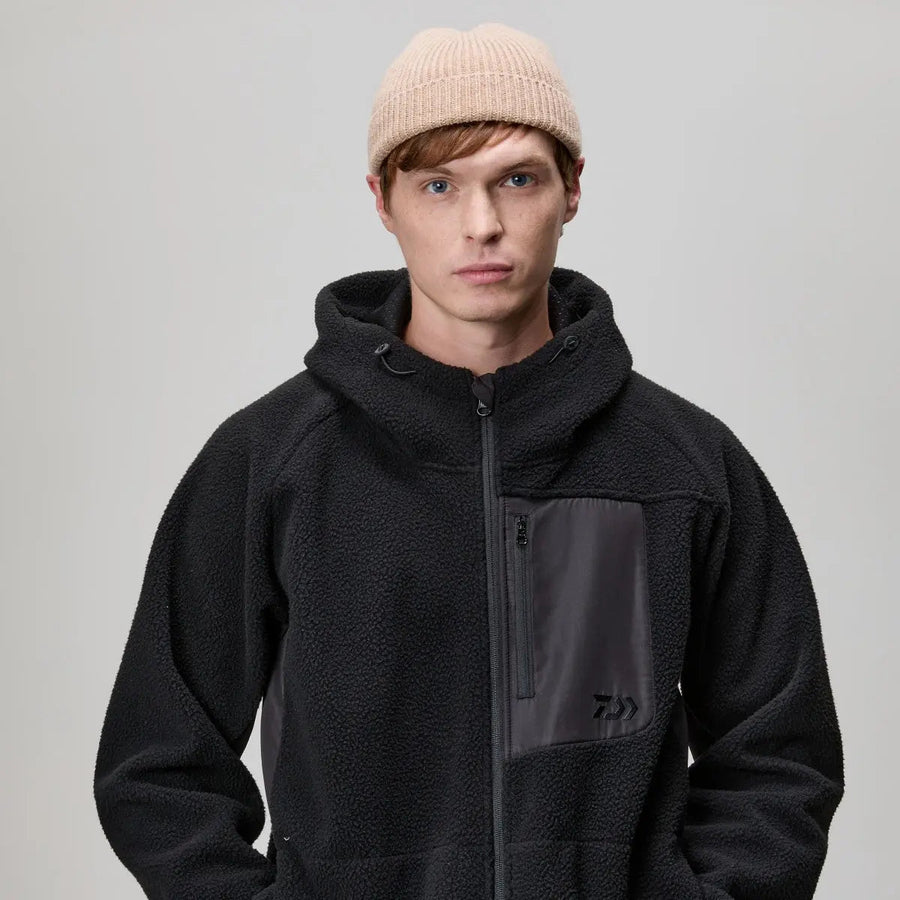
- Short fisherman. Sits above the ear, with a deep cuff and a short crown. It stays put, looks neat with a collar and is the easiest to wear indoors. Our Merino Fisherman Beanie is cut this way.
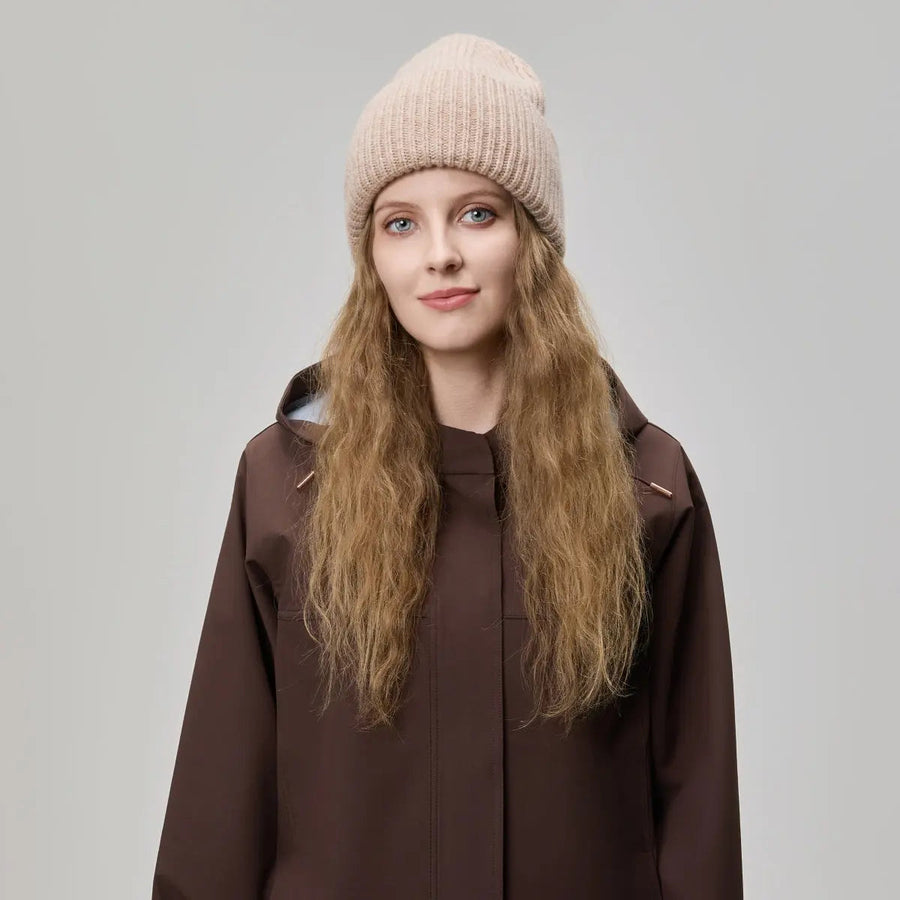
- Classic cuffed. Covers the top of the ear with the cuff folded once. The everyday choice, like the Classic Rib Wool Beanie.
- High cuff. A longer body and a tall cuff. Leave it up for full ear cover, or fold the cuff again for a shorter look. See the High Cuff Merino Beanie.
- Slouch. Extra length at the crown that falls toward the back. Relaxed, lighter, better for mild days.
Check the measurements, not just the label
"One size" covers a range. Three numbers tell you more: width laid flat, height, and cuff depth. A beanie around 21 cm wide and 16 cm tall will sit high and short; one around 23 cm wide and 25 cm tall will cover your ears with room to spare. We list these on every beanie where we have them.
Your head circumference matters too. Wrap a soft tape just above the eyebrows and ears. Most adults measure 54–60 cm, and that's the range our one-size beanies are knit for.
Rib, stretch and fiber
A ribbed knit stretches to fit and springs back. Wool and merino hold that spring for years; cotton relaxes a little with wear, which is why cotton beanies feel looser after a few weeks. A blend with some nylon or polyamide keeps a rib springy, which is part of why so many good beanies aren't 100% one fiber.
A quick way to choose
- Wearing it all day, indoors and out: short fisherman or classic cuff in merino.
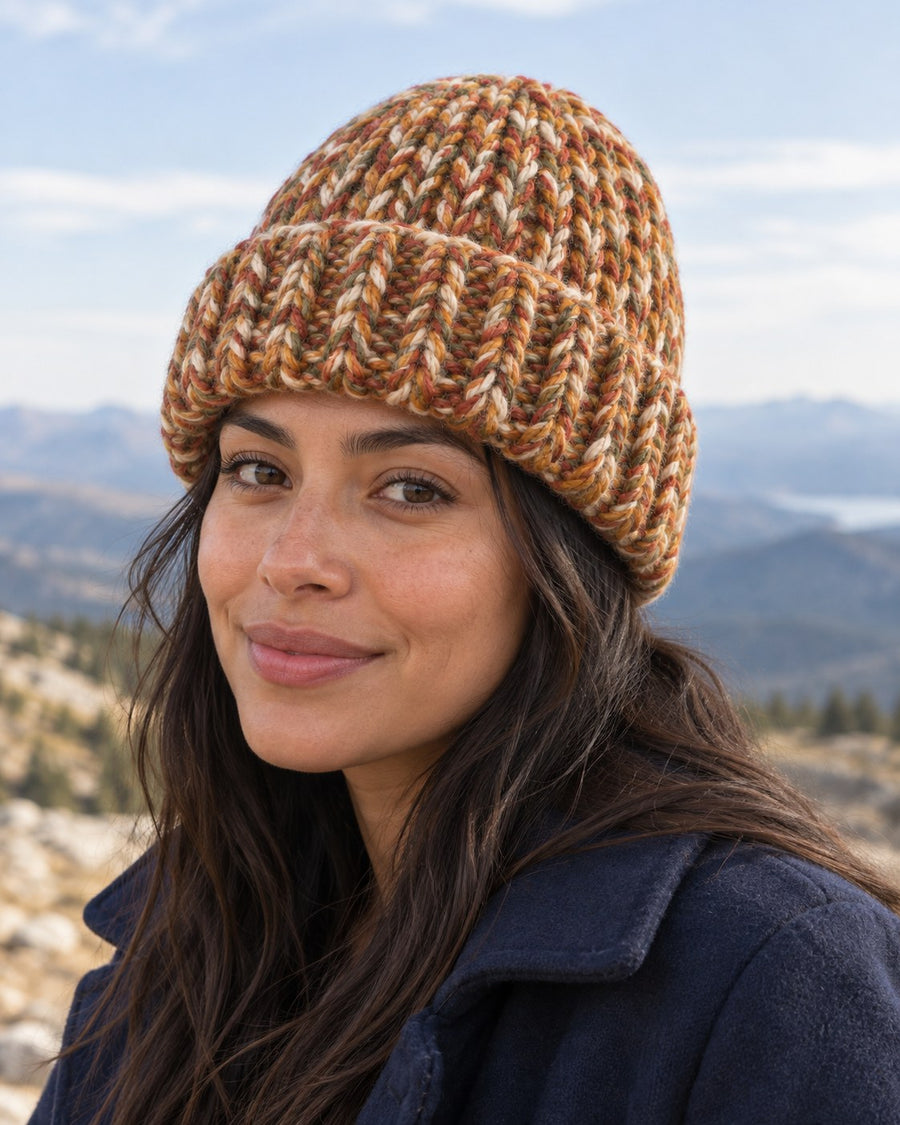
- Real cold, long walks: high cuff, or a chunky hand-knit.
- Mild days, or you run warm: slouch or cotton.
- Sensitive skin: merino, or organic cotton if wool is out.